

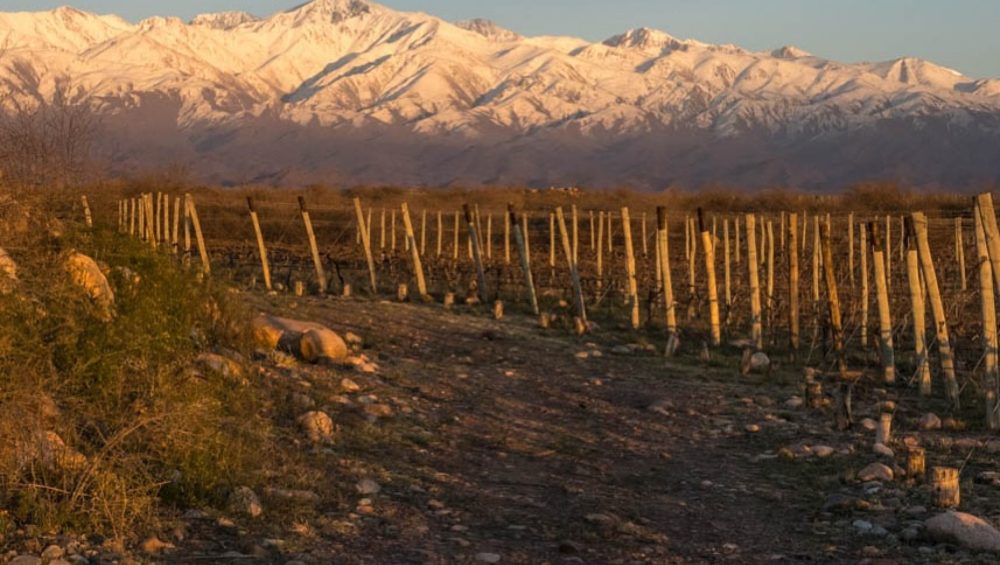
It’s winter in the Uco Valley, Mendoza.
Long before harvest, the next vintage is already taking shape. It evolves in the quiet of winter, as El Niño, historic snowfall, and meticulous vineyard work begin to shape the season ahead. Here’s an update from The Vines of Mendoza team:
Climate: What El Niño Means for the Vineyard.
With El Niño now firmly established, all signs point to the next growing season being marked by greater water availability and a higher likelihood of rainfall during spring and summer. The abundant snowfall recorded in the Andes this winter already indicates improved water reserves for the season ahead. For the vineyard, this represents a challenge. While the improvement in our water reserves is both necessary and beneficial, wetter conditions require even more precise vineyard management, with particular attention to irrigation, vigor control, weed management, and vineyard health monitoring. These conditions also increase the risk of diseases such as downy mildew, powdery mildew, and botrytis. As a result, the vineyard team will intensify preventive measures and closely monitor vine health throughout the season to protect both the vineyard and fruit quality.

Historic Snowfall in the Andes.
The abundant snowfall recorded in the Andes this winter is excellent news for the next growing season. According to official data, snowfall in the Mendoza River basin has already exceeded the annual average, and areas farther south have accumulated 95% of their annual average snowfall, even though winter is not yet over. The significance of this winter becomes even clearer in context. Since 2010, the Andes in Mendoza have experienced a prolonged drought, with below-average snowfall for 15 consecutive years, excluding 2023 and, in some mountain areas, 2016.
With additional winter storms still forecast for the coming weeks, all indications suggest that this year’s snowfall will surpass historical averages. We anticipate an excellent supply of meltwater for the next growing season. That also means we must continue to monitor rainfall closely throughout the spring.
Winter Vineyard Work.
During winter, the vineyard enters one of the most important stages of the year: pruning. This essential task defines each vine’s productive structure and lays the foundation for the next harvest. Pruning began in mid-June. In addition to the usual crop load adjustments, this year’s work will involve a particularly meticulous, block-by-block approach, tailoring pruning decisions to support the recovery of the areas most affected by last season’s extreme weather events (not the least of which was hail!). At the same time, the team continues with the vineyard’s regular winter work, including mechanical weed control, preventive maintenance of the irrigation system, and manure application, a practice that helps improve soil fertility and structure ahead of the new growing season.


